A short course on PBPK modelling & MID in pregnancy & childhood
COMING SOON! READ BELOW FOR A TASTE
Welcome to this self-study course on physiologically-based pharmacokinetic (PBPK) modelling and model-informed dosing (MID) in children and pregnant women. This modular programme has been designed as a practical, self-contained resource for learners who may not have direct access to technology, online software, or extensive datasets. Instead, it offers structured readings, guided activities, and self-assessment exercises using only printed materials that allow you to develop a basic understanding of PBPK modelling and confidence in using MID.
Why focus on children and pregnant women? These are vulnerable populations, often excluded from clinical trials due to ethical and practical constraints. Yet, they are also groups in which safe and effective medication use is essential. Traditional ‘one-size-fits-all’ dosing strategies can fail in these populations because of rapid age-related physiological changes in children and the complex pregnancy induced adaptations . These physiological changes can significantly impact drug pharmacokinetics and thereby drug concentrations. Due to the lack of studies supporting the dose, effectiveness and safety, leading to poorly substantiated dosing information in these populations
PBPK offers a science-driven way of filling this evidence gap, predicting drug concentrations based on physiology, biochemistry, and known pharmacology to find the optimal dose for any given time during the pregnancy or in childhood. Once validated, these doses are made available via a knowledge bank, which prescribing clinicians can access free of charge from anywhere in the world to give model-informed doses.
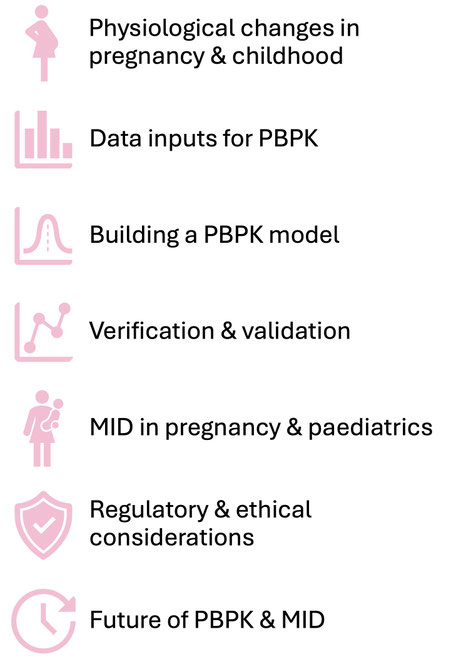
The course is structured into nine modules. You will begin with the foundations — basic principles of PBPK and MID (Unit 1), physiological changes during childhood and pregnancy (Unit 2), and drug absorption, distribution and elimination in these populations (Unit 3). You will then progress to the practical aspects of building PBPK models (Unit 4),followed by model verification and validation (Unit 5).
The course then explores key reference tools and resources available in the Netherlands, including the Kinderformularium and Moeders van Morgen/Lareb (Unit 6 & 7), before examining regulatory and ethical considerations from EMA, FDA, and WHO perspectives (Unit 8). Finally, you will look towards the future of PBPK modelling and MID — digital twins, artificial intelligence and big data as well as bedside precision dosing (Unit 9).
Each module includes:
- Clear learning objectives to focus your study.
- Structured content with explanations, examples, and illustrations.
- Activities (true/false, short answer, reflection prompts, and case studies).
- A self-test to check your understanding and readiness to move on.
By the end of this course, you will not only understand the principles of PBPK but also appreciate its practical application through model-informed dosing in improving clinical outcomes, and equity for children and pregnant women.